

EXPLORE THE INSIGHTS
Southeast Asia MRO and Local Technical Representation
January 23, 2026
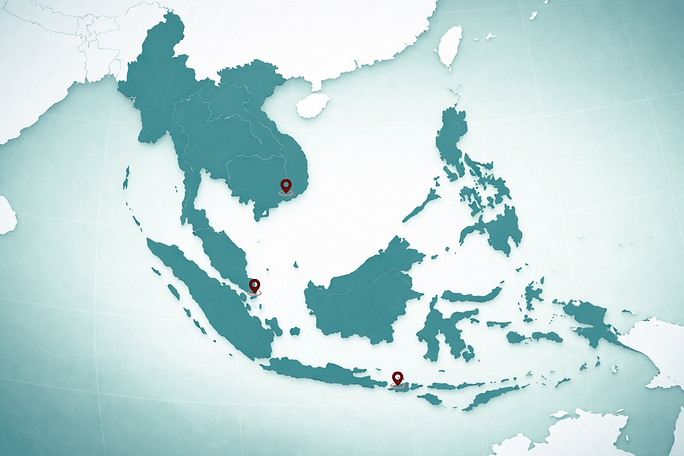
Did you know that of the ~8,000 projected global fleet growth, the Asia-Pacific region accounts for almost half of it?
According to Oliver Wyman’s Global Fleet and MRO Market Forecast 2024–2034, the global fleet is expected to increase from 28,398 aircraft in 2024 to 36,413 aircraft in 2034. Of this growth, approximately 3,864 aircraft are expected to come from the wider Asia-Pacific region, including China and India.
While much attention has been given to the rise of China and, more recently, India, Southeast Asia is a region that should not be overlooked. Like other developing markets, Southeast Asia’s aviation sector continues to grow at a steady pace. Boeing’s Commercial Market Outlook estimates annual fleet growth of 6.6% in the region, with Southeast Asia accounting for approximately 10% of the global fleet in 2024, compared to around 5% in 2015.
Growing Airline and MRO Landscape to Match
The region is home to established flag carriers such as Singapore Airlines (SIA), Cebu Pacific, and Garuda Indonesia, as well as several LCC powerhouses, most notably Scoot, AirAsia, Lion Group, and the fast-growing VietJet Air. Based on publicly available data from Boeing, Southeast Asian airlines currently hold 693 unfulfilled aircraft orders. The region also benefits from strong passenger demand, with approximately 7.0% annual passenger growth, driven by an expanding middle-income population. Its share of the global fleet is projected to continue increasing.
Unsurprisingly, rising fleet numbers and passenger demand are driving higher maintenance requirements and has translated into a visible increase in MRO developments across Southeast Asia, with more facilities being established in recent years. These investments are not limited to local entities and airline groups such as SIA Group, AirAsia (through its spinoff ADE), and Lion Group, all of which have expanded their in-house MRO capabilities or established new facilities. International players are also increasing their presence in the region. Examples include the newly announced nacelle-focused xCelle facility in Singapore by AAR and AFI KLM in 2025, GE Aerospace’s expansion of its existing MRO facilities in Malaysia and Singapore, and the opening of new facilities in Denpasar by FL Technics, the MRO arm of Lithuania-based Avia Solutions Group, in 2024.
The Role of Local Technical Representative
As MRO activity expands across the region, so does the complexity of coordination between airlines, lessors, MROs, and OEMs. Increased capacity is a positive development, but it also introduces variability in standards, communication, and execution. This is where the role of a competent local technical representative becomes increasingly relevant, both for airlines and lessors outside the region engaging Southeast Asian MROs for maintenance activities, as well as for fellow consultants seeking reliable on-the-ground support.
Physical Presence and Independent Oversight
On-site representation provides practical value through physical presence. It allows progress to be verified directly, specifications to be reviewed in context, and the asset to be assessed in person, together with its potential risks. Effective technical representation goes beyond monitoring against specifications and issuing routine progress updates. It includes identifying issues early, escalating concerns where appropriate, and acting as a technical liaison between airlines, lessors, and MROs.
Local Communication, Context, and Operational Nuance
While aviation standards are largely global, operational realities differ by region. Communication styles, language nuance, and local business practices can influence outcomes. Having a representative who is familiar with the local operating environment and has worked within these ecosystems provides practical advantages. Established networks also contribute to a better understanding of what is typical (or atypical), and where recurring patterns or risks may exist across different facilities.
Cost Efficiency and Practical Coordination
Local representation can also reduce the need for frequent international travel. Flights, accommodation, and travel time accumulate quickly, particularly for routine oversight or non-critical coordination. In addition, working across time zones often slows communication and decision-making. A local presence helps streamline coordination while maintaining effective oversight.
CONTACT US


